Your Campaign Needs a Home Kit
New matchup. New message. Same unmistakable brand. How to keep sportsbook and prediction-market creative fresh without starting from zero every weekend.
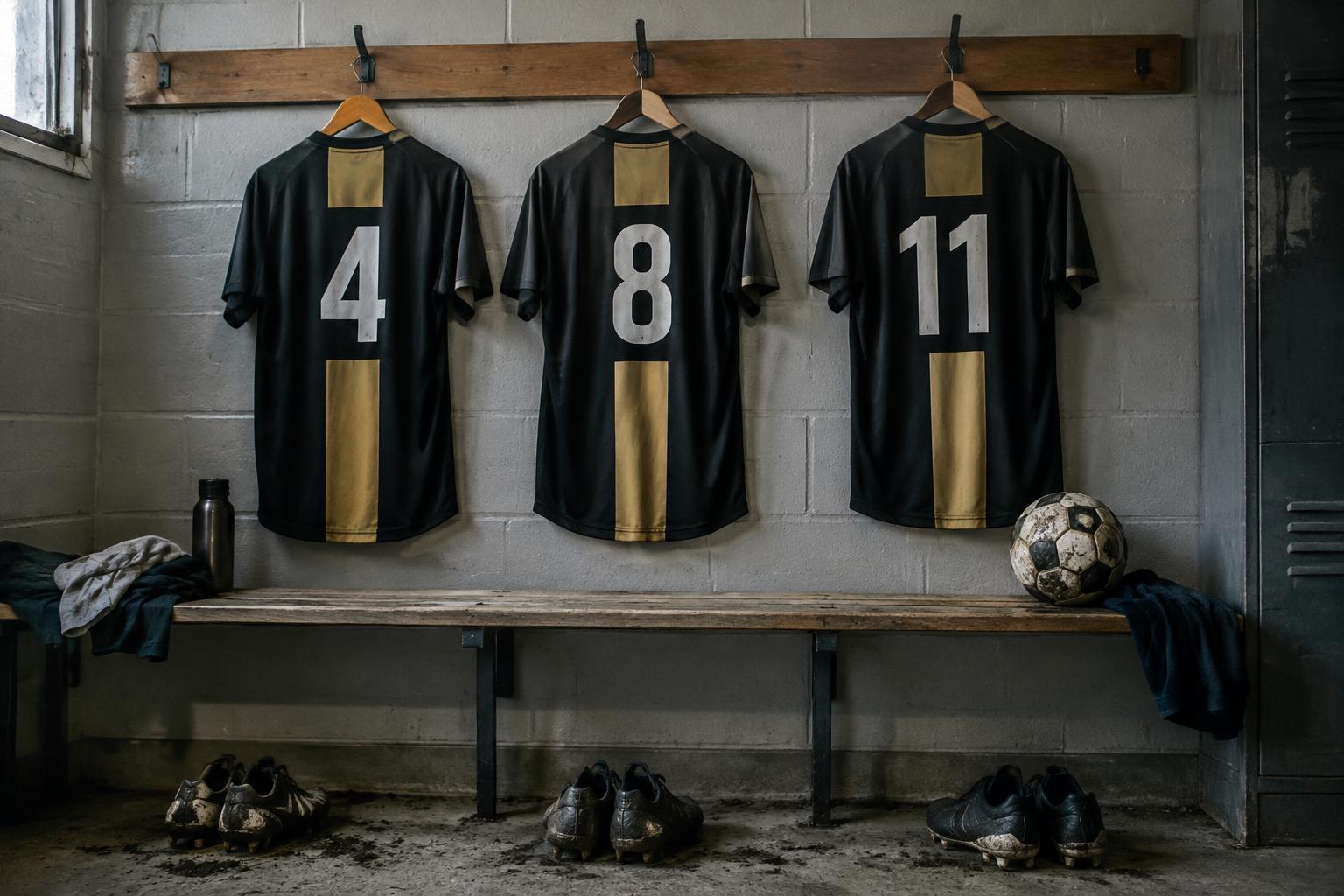
A team can change its lineup, its formation and its game plan without asking fans to learn who it is again. The kit does some of that work before the first whistle. A campaign should have the same advantage.
In sports marketing, the schedule gives you a new story every week. A rivalry. A playoff race. A ridiculous finish. That is a reason to change what the ad says, not necessarily everything that makes the ad yours. Too often, a request for fresh creative becomes a new typeface, a new palette and a completely different voice. The campaign gets a reset. So does recognition.
Fresh is not the same as unfamiliar
The useful distinction is between the parts that carry identity and the parts that carry the moment. Your recognizable graphic device, headline treatment and tone can stay. The matchup, image, product story and punchline can move. Consistency gives the audience something to recognize while the idea gives them something new to notice.
That recognition is harder to earn than a polished brand deck suggests. In its 2023 research with design agency JKR, Ipsos tested brand assets across five types with more than 26,000 respondents worldwide. Only 15% of the assets tested reached its Gold standard of distinctiveness.
This was cross-category research, not a study of betting operators. It does not tell us that a particular sportsbook palette works or that an indistinct asset makes an entire media budget worthless. It does give creative teams a useful warning: making an asset is not the same as making it recognizable.
The badge cannot do all the work
Putting the logo in a corner is necessary. It is not a complete identity system. In the same Ipsos study, only 19% of logos reached Gold standard. A familiar-looking mark is no guarantee that the rest of an ad will point to the right brand.
For a sportsbook, exchange or prediction market, the question is practical: what survives when the ad is cropped, the headline changes or the viewer only catches a glance? A repeatable framing device. A particular way of presenting a market. A voice that sounds like your brand rather than a generic commentator. Those elements need to work together, not compete for attention.
Keep the kit. Change the game plan
Start the next campaign with two lists. One is what stays recognizable. The other is where the creative team can surprise people. Neither list should be long enough to become a rulebook nobody reads.
- Keep: the strongest identity cues, a clear logo treatment, your headline hierarchy and a consistent voice. Choose cues people actually connect to the brand, not just the ones the team likes.
- Change: the fan insight, matchup, photography, opening line and product benefit. Let the sport supply the new story instead of relying on a different visual style every week.
- Build: a small family of formats for rivalry games, feature launches and reactive moments. Give each enough room for a real idea, not just new names dropped into boxes.
- Protect: readable terms, clear product explanations and required disclosures. Keep them legible when the artwork moves from a large placement to a small phone screen.
Imagine a basketball playoff run. The first ad explains a product feature. The second plays on a rivalry. The third responds to an overtime finish. Different reasons to pay attention, one recognizable visual language. That is a campaign system, not the same ad three times.
Consistency is not a creativity tax
System1 and the IPA's 2024 Compound Creativity study looked at more than 4,000 ads from 56 brands across 44 categories over five years. The most creatively consistent brands averaged a 3.3 Star Rating, compared with 2.6 for the least consistent group. That rating measures emotional response and predicts long-term brand-building potential; it is not a conversion rate.
The study links consistency with stronger creative quality. It does not prove that keeping a typeface will lift your signups by a fixed amount, and its cross-category findings are not sportsbook benchmarks. The useful takeaway is simpler: recognizable work and interesting work do not have to be opposites.
Test the idea, not the entire identity
When a campaign underperforms, changing every element makes it harder to learn anything. Was the problem the hook, the offer, the product explanation or the audience? Hold the identity steady and test a meaningful change to the message. You get a cleaner read and avoid treating every disappointing result as a reason to rebrand.
Then check recognition separately. Show people the work, ask which brand they think it belongs to, and pay attention to confusion with competitors. Pair that feedback with the campaign's actual objective. Clicks, qualified signups and brand recognition answer different questions; none should pretend to answer all three.
The next weekend will bring a new opponent and a new story. Your creative should be ready for both. Just make sure it still comes out of the tunnel wearing your kit.
Building a brand in this space?
Start a ProjectGet New Stories
New takes on brand and growth for sportsbooks and prediction markets, sent when they publish.